Mahjong Slide: Zen
- 4.7
- Rating
- 1.00M
- Installs
- Free
- Price

 Analysis by App-foxy
I came away from Mahjong Slide: Zen with a simple impression: it is best understood as a quiet matching game rather than a traditional Mahjong experience. That distinction matters. If you want a calm board game that can fill a few spare minutes without demanding a long tutorial or intense concentration, Playful Bytes has made an appealing choice. If you are looking for the full rules, strategy, and competitive tension of classic Mahjong, this is likely to feel too light.
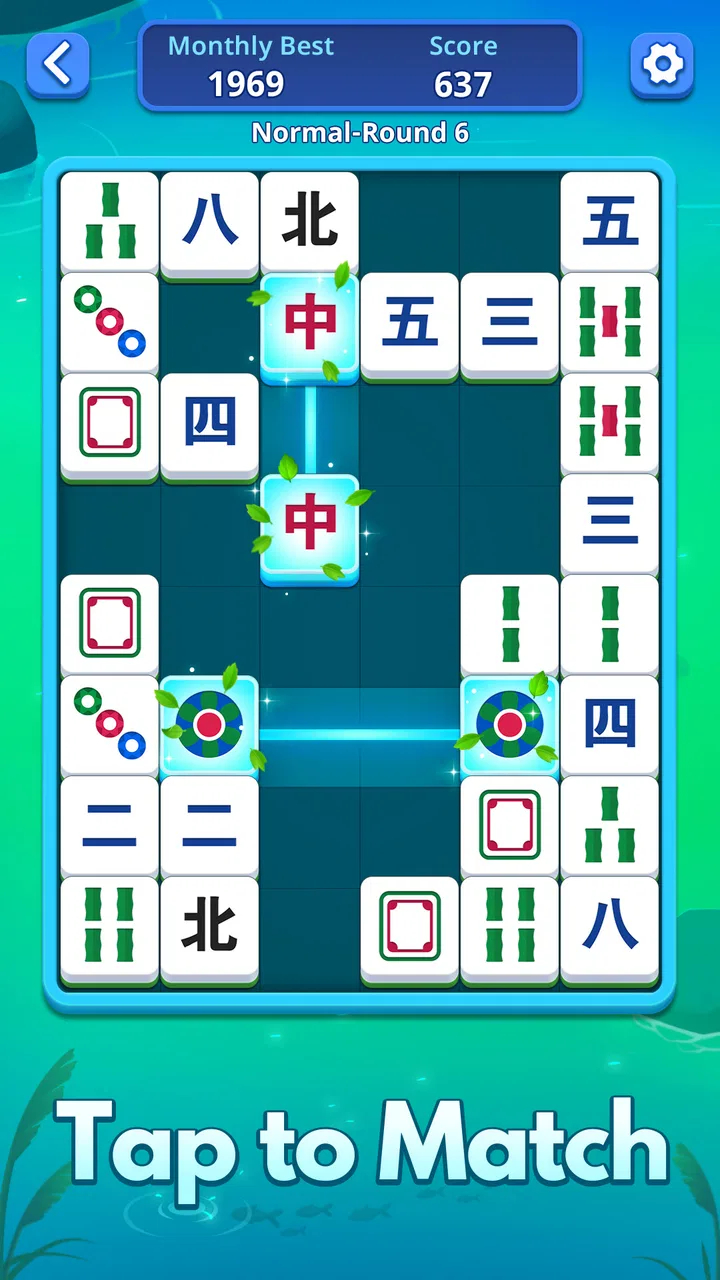
The game belongs to the board category and is free to play, which makes it easy to try without much commitment. Its central appeal is the combination of familiar Mahjong-style symbols and sliding, matching-oriented play. I found that blend more approachable than a conventional tile game because the basic goal is easy to understand, while the board still asks me to pause and consider what move will leave the most useful options afterward.
That balance gives the game its strongest identity. It is not trying to overwhelm me with complicated rules. Instead, it turns a recognizable tile theme into a compact mental exercise with a relaxed pace. The result is pleasant in short sessions, especially when I want something interactive but not noisy or emotionally demanding.
You May Also Like

 Blood Strike: 2.5 Anniversary
Blood Strike’s Loadouts Turn Every Drop Into a Tactical Gamble
A close look at Blood Strike’s custom loadouts: how fast access to signature weapons reshapes its battle royale rhythm, rewards preparation, and narrows the gap between fights.

 Pandora - Music & Podcasts
Pandora’s Music Is Easy to Start, but Harder to Recover
Pandora’s strength is its low-effort path from a seed to a station. Its weak spot is how much confidence it asks you to place in connection, setup, and quiet recovery.

 8 Ball Pool
 Is Built on Rivalries, Rematches, and Routine
A close look at the rivalries, rematches, shared routines, and unanswered safety questions that turn a quick pool match into a persistent mobile community.

 Samsung Music
’s Quiet Strength Is Playing What You Already Own
Its reach comes less from spectacle than from dependable access to a personal library. That simplicity is both the app’s strongest retention engine and its ceiling.

 AccuWeather: Weather Radar
AccuWeather Review: A Quick, Clear Forecast for Everyday Decisions
For everyday plans, the best forecast is the one you can understand quickly. AccuWeather makes rain timing, radar, and local conditions easy to act on, with a few trade-offs.

 Hill Climb Racing
Why Hill Climb Racing Still Turns Crashes Into One More Run
A tiny car, a bumpy hill and one more upgrade: Hill Climb Racing keeps resurfacing because its simple chaos makes every near-miss feel personal.
More From Our News Desk



How the sliding format changes the usual Mahjong formula
The most important thing to understand is that the word “Mahjong” here sets the visual and thematic mood, but the experience is built around matching and movement. I do not approach each board as I would a traditional Mahjong table. I am watching for useful combinations, thinking about how a slide changes the available space, and trying not to make a move that leaves the board awkwardly arranged.
That makes the game accessible to people who may have tried tile-matching games before but do not know Mahjong’s formal rules. There is no need to memorize a large rule set before enjoying the first session. The symbols communicate enough of the theme to make the board feel distinctive, while the sliding action keeps the focus on immediate decisions.
In practice, I found the best rhythm came from resisting the urge to match the first obvious pair. A quick match can be satisfying, but a slightly less obvious move may preserve better routes for the next few turns. This is one of the game’s more interesting trade-offs: it looks relaxing, yet the board rewards a little planning. I could play casually, but careless movement still had consequences.
Another useful habit is to scan the entire board before touching it. The sliding structure means that a move can affect more than the tiles I am directly watching. I started looking for clusters, open lanes, and areas that might become blocked after a tempting match. This small change in approach made the game feel less like random tapping and more like a compact spatial puzzle.
The strongest part of the design is its low barrier to entry combined with just enough forward planning to prevent it from becoming mindless. That is a difficult middle ground for a relaxing board game. Many simple matching titles become repetitive almost immediately, while more demanding puzzle games can feel like work. This one sits between those extremes for much of a normal session.
A good fit for short breaks and quiet routines
I can easily imagine using it during a coffee break, while waiting for an appointment, or near the end of the day when I want a game that does not require a large time investment. The board-game format gives a session a clear beginning and end, and the calm presentation suits moments when a fast action game would be too distracting.
A realistic everyday use case is a short commute with only a few spare minutes. I would open the game, work through a board while standing or sitting, and put the phone away without feeling as though I had abandoned a complicated campaign. It also works well as a wind-down activity because the decisions are small and local rather than tied to a larger story, ranking system, or social obligation.
That simplicity is especially helpful for players who want something they can understand immediately. Older players, casual board-game fans, and people who enjoy visual matching may find the format welcoming. The Everyone age rating also reflects the broad, non-confrontational nature of the experience. I would be comfortable recommending it to someone who wants a gentle puzzle rather than combat, competition, or fast reactions.
The game’s audience reach is reflected in its popularity. It has passed one million installs and holds a 4.7 average from around 3.6 thousand ratings, with roughly 185 written reviews. Those figures do not replace personal testing, but they do fit my impression that the game has found a clear audience among people who prefer approachable, calming play.
Where the game asks for more thought than it first appears
The sliding mechanic creates a subtle difference between recognizing a match and choosing a good move. When I saw an easy combination, the real question was whether taking it immediately improved the board or simply removed a convenient option while leaving a less flexible arrangement behind. This is where the game earns its place as a board puzzle instead of functioning as a purely decorative tile-matching exercise.
I also learned to treat crowded sections as planning problems. If several tiles are competing for the same space, clearing one area may open a route through another, but it can also make the remaining arrangement harder to read. Watching the board after each move is more useful than trying to plan an entire solution in advance. The position changes quickly enough that a flexible approach works better than a rigid sequence.
For new players, my practical advice is to begin with the broadest view of the board. Look for moves that create room, not only moves that produce an immediate match. When two choices appear equally attractive, I prefer the one that leaves more visible lanes and fewer isolated tiles. This is not a complicated strategy, but it makes the early learning curve smoother and helps prevent avoidable dead ends.
Another tip is to slow down when the board looks nearly solved. The final few pieces can be more awkward than the opening because there are fewer alternatives. I found it tempting to rush at that point, especially after a clean sequence of matches. Taking a moment to check how a slide will affect the remaining arrangement is usually wiser than assuming the ending will resolve itself.
The meaningful limitation: calm design can become narrow
The same restraint that makes the game approachable may limit its long-term appeal. Players who need deep progression, a strong story, competitive leaderboards, or a large variety of modes may find the experience too focused. Its pleasure comes from the board in front of me, not from a broad collection of systems surrounding it.
I would also hesitate to recommend it to someone who wants authentic Mahjong rules. The tile theme may create that expectation, but this is not the right substitute for learning or playing traditional Mahjong. A dedicated Mahjong app would be better for anyone interested in established hands, table rules, or the social and strategic structure of the original game.
There is a second kind of friction for players who dislike repetition. A calm matching loop can be comforting, but it can also feel familiar quickly if I am playing for a long stretch. I enjoyed it more when I treated it as a short-session game instead of trying to turn it into an all-evening activity. Its design benefits from moderation; extended play can expose the narrowness of the core idea.
That does not make the game poorly designed. In fact, the focused scope is part of its appeal. It simply means the right expectations are essential. I would choose it over a more elaborate puzzle title when I wanted quiet concentration, but I would choose a deeper strategy game when I wanted a sustained challenge with more layers to master.
What the current release means for prospective players
The game was released on November 2, 2025, and the current version is 1.5.0. It supports devices running Android 8.0 or later. For someone deciding whether to install it, the practical takeaway is straightforward: check that the phone or tablet meets that system requirement, then approach the download as a low-commitment experiment rather than a purchase decision, since the game is free.
Free access is a genuine advantage here because the concept is easy to judge personally. The game’s appeal depends on whether the sliding boards feel soothing or repetitive to you, and a short hands-on session answers that better than a description can. I would not tell a reader to install it expecting a large premium-style board-game package. I would install it expecting a compact, accessible matching game with a Mahjong-inspired presentation.
Playful Bytes has kept the concept easy to explain, which is valuable when recommending it to friends or family. I could hand the phone to a new player and describe the basic objective without a long lesson. That makes it suitable for shared discovery, even though the game itself is primarily a solo activity. Someone unfamiliar with board puzzles can start experimenting quickly and gradually pick up the value of planning ahead.
The age rating of Everyone is another reason it fits mixed households and broad casual audiences. The experience is gentle in tone and does not depend on mature themes. I still think individual preferences matter more than the rating: a child who wants fast action may lose interest, while an adult who enjoys orderly visual puzzles may find it surprisingly absorbing.
Who should install it, and who should look elsewhere
I would recommend it to players who enjoy tile matching, spatial organization, and games that reward patience without demanding constant pressure. It is particularly suitable for people who want a relaxing board game for short breaks, or for anyone who likes the look of Mahjong but does not want to study its traditional rules first.
It is also a good choice for players who prefer self-paced decisions. The game does not need the reflexes of an arcade title, and its most satisfying moments come from spotting how one movement can improve the next few possibilities. If you enjoy arranging, clearing, and gradually simplifying a board, the sliding format gives the familiar tile theme a useful twist.
I would point competitive players toward a more results-driven puzzle game instead. If your enjoyment depends on timers, head-to-head matches, detailed progression, or a constant sense of escalating difficulty, this may not provide enough variety. Likewise, traditional Mahjong fans should select an app built around the actual game rather than treating this as a rules-based replacement.
My strongest recommendation is to play it in deliberately short sessions at first. That lets the relaxing quality work in its favor and makes it easier to notice whether the board decisions remain interesting for you. If you find yourself enjoying the process of preserving space and choosing between several possible matches, it may become a dependable casual game. If you are only waiting for a larger system to appear around the core loop, you will probably reach its limits quickly.
My verdict after spending time with the boards
Mahjong Slide: Zen succeeds because it understands its job. It offers a calm, approachable board puzzle with recognizable Mahjong-inspired tiles and a sliding mechanic that adds more thought than simple matching. I liked that I could begin immediately, but still improve my play by considering space, timing, and the consequences of each move.
Its weaknesses are closely tied to that same focus. The experience may feel too contained for players seeking traditional Mahjong, competitive depth, or a long progression path. I also found that its relaxed loop is more enjoyable in measured sessions than in marathon play. Those are important limitations, but they do not undermine the game’s central purpose.
With a 4.7 average and more than one million installs, it has clearly connected with a substantial casual audience. My own recommendation is similarly specific: try it if you want a free, gentle matching game that can occupy a few quiet minutes and reward a little planning. Skip it if you need a full Mahjong simulation or a constantly expanding challenge. For the right player, this is a pleasant small puzzle that turns sliding tiles into a surprisingly thoughtful way to unwind.
FAQs for Mahjong Slide: Zen
01What is Mahjong Slide: Zen and how does it differ from traditional Mahjong?
Mahjong Slide: Zen is a unique twist on the traditional Mahjong game. Instead of simply matching tiles, players slide them across the board to create matches. This adds a layer of strategy and challenge, making it a fresh experience for Mahjong enthusiasts. The game also includes calming Zen-inspired graphics and soundtracks to enhance the relaxation aspect.
02Is Mahjong Slide: Zen free to play, and are there any in-app purchases?
Mahjong Slide: Zen is free to download and play, offering a full experience without any initial cost. However, it includes optional in-app purchases that can enhance gameplay, such as additional tile sets or hints. These purchases are entirely optional and don't affect the core game, allowing players to enjoy it fully without spending money.
03What are the system requirements for installing Mahjong Slide: Zen on iOS and Android devices?
For iOS devices, Mahjong Slide: Zen requires iOS 11.0 or later and is compatible with iPhone, iPad, and iPod touch. On Android, it requires Android 5.0 and up. It's optimized for both platforms to ensure smooth performance, but it's recommended to have a stable internet connection for any updates or online features.
04Does Mahjong Slide: Zen offer any multiplayer or social features?
Mahjong Slide: Zen focuses primarily on a single-player experience, designed for personal relaxation and mental challenge. However, it includes leaderboards where players can compare their scores with friends and other players worldwide, adding a competitive edge. Social sharing features are also available to showcase achievements and progress.
05Can I play Mahjong Slide: Zen offline, and what are the benefits of playing online?
Yes, Mahjong Slide: Zen can be played offline, allowing you to enjoy the game without an internet connection. Playing online, however, provides access to features such as leaderboards, updates, and any new content added by developers. Online play also ensures your progress is backed up and synchronized across devices.
Pros
- Intuitive controls make sliding tiles easy.
- Beautiful
- calming graphics enhance relaxation.
- Variety of puzzles keeps gameplay fresh.
- No intrusive ads interrupting your game.
- Supports offline play for on-the-go enjoyment.
Cons
- Limited hints can frustrate beginners.
- Occasional lag on older devices.
- In-app purchases can be a bit pricey.
- No multiplayer mode available.
- Music can become repetitive over time.

Mahjong Slide: Zen
Gallery